Resources

Why Operators Prefer TrueMeter Over GetChoice
Most enterprise energy providers approach utility spend the same way: deploy a team of consultants, go to market on large procurement contracts, and layer a reporting platform on top. GetChoice fits that mold. Its model centers on energy procurement and advisory services for large enterprises, delivered by a team of experts and priced as a custom engagement — powerful for a Fortune 500 energy desk, but heavy for an operator running dozens or hundreds of restaurants, stores, hotels, small venues or gyms.
Seven Line Items Quietly Inflating Your Utility Bills, and the AI Agents That Deflate Them
If you have ever stared at a utility bill and thought it might as well be written in ancient Sumerian, you are not alone. Most multilocation operators receive bills that run several pages, list a dozen or more line items, and offer almost no explanation of what any of them actually mean.


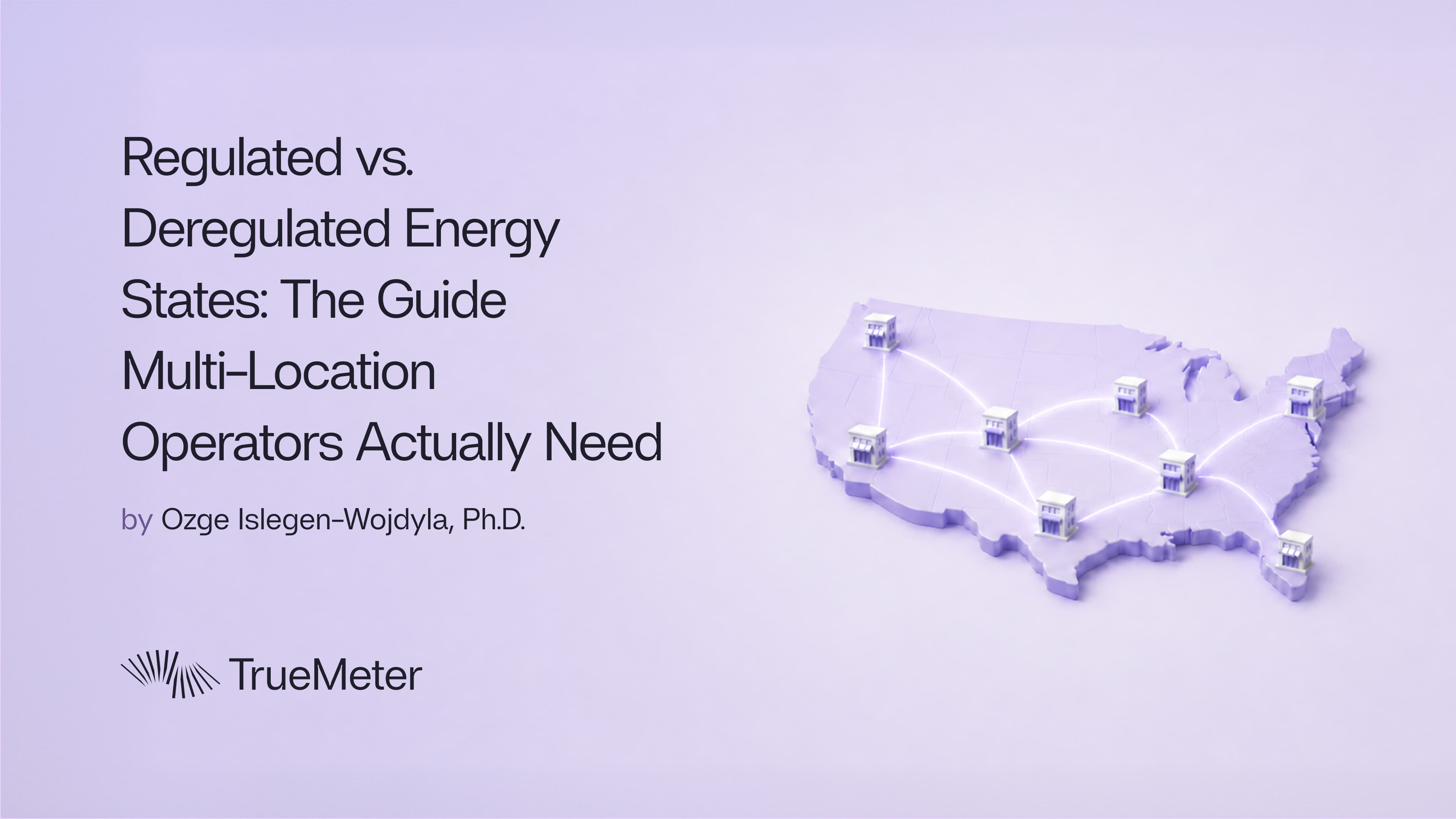
Regulated vs. Deregulated Energy States: The Guide Multi-Location Operators Actually Need
If your business has locations in Texas, Ohio, Pennsylvania, Illinois, New Jersey, Maryland, or D.C., you have a choice that most operators don't know they have:You don't have to pay whatever your utility charges.
We Paid Close to $1M a Year for a Bill Pay Agent… And Got Very Little in Return
When I was running finance and accounting at GameStop, we had 4,500 locations across dozens of countries. That added up to thousands of utility bills per month. We needed someone to manage them, so we hired a bill-pay agent.

Keeping Utilities Honest: The TrueMeter Story
I've lived and worked in many different cities and countries throughout my life. Across all of them, I've yet to find one where utilities worked properly, charged fairly, and didn't spark controversy. The frustrations seemed universal: confusion over electricity bills that don't make sense, costs that surge without explanation, and that nagging feeling you're being overcharged.
Why Operators Prefer TrueMeter Over Engie Impact
Most utility bill management providers focus on one outcome: getting invoices paid on time. Engie Impact fits that mold. Their service centers on collecting bills, running tolerance checks, and presenting consolidated invoices for funding, while clients pay on a per-invoice basis with no direct link between fees and the savings produced.
Why Operators Prefer TrueMeter Over Schneider Electric
Schneider Electric is a utility bill payment service owned by Schneider Electric SE, a French multinational corporation that has offerings in physical generation assets, energy technology, and digitalization for industry. Their bill pay platform processes utility bills for multi-location businesses at $3-17 per bill with no savings optimization. This per-bill model creates a structural misalignment. Schneider Electric is paid the same amount whether or not your bill is accurate or optimized.
TrueMeter: AI Energy Agent That Optimizes Utility Bills
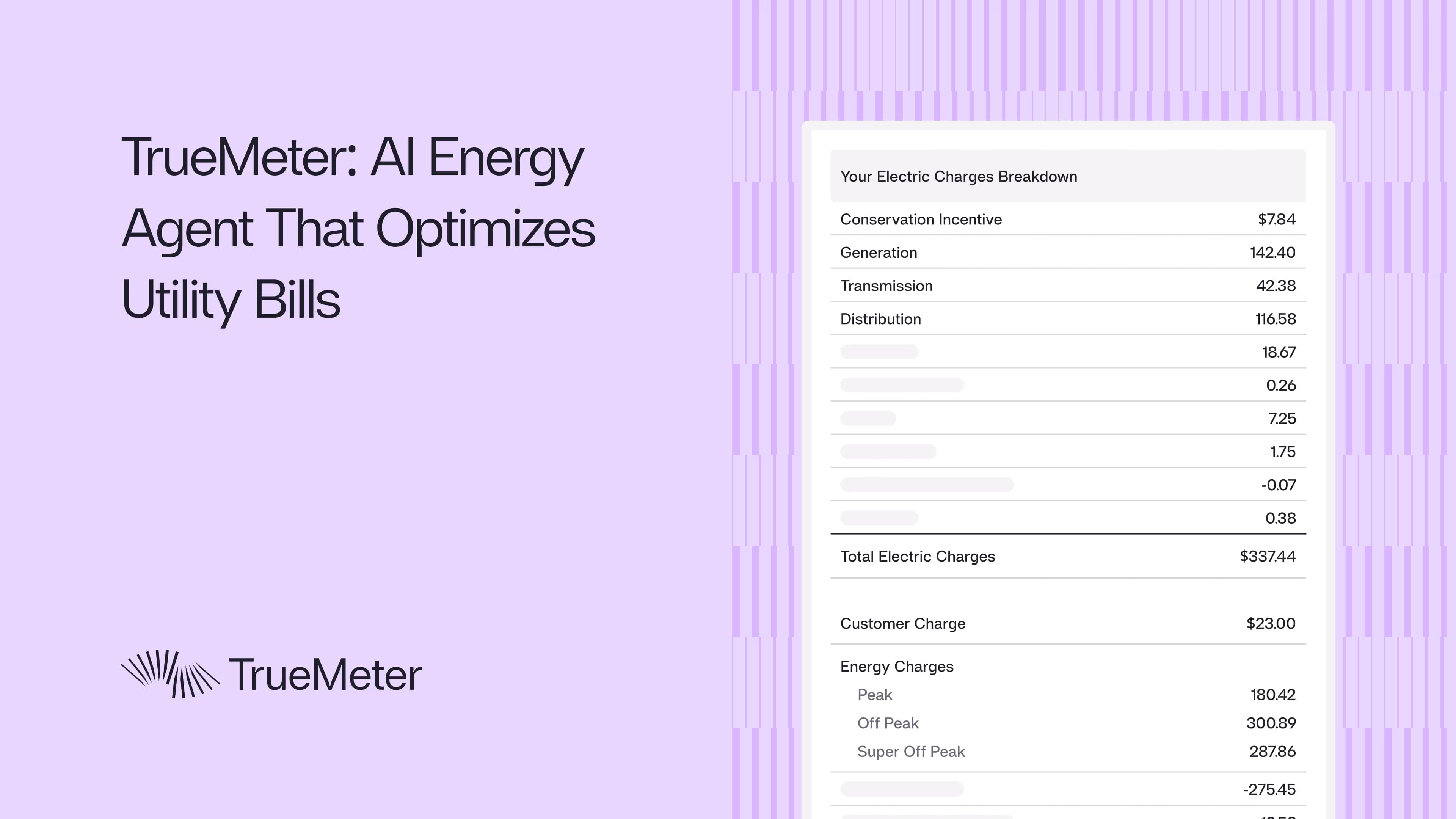
Ever looked at your utility bill? It’s packed with arcane terms: franchise fee surcharge, conservation incentive, electric public purpose, power charge indifference adjustment, on-peak, off-peak, super-off-peak… It might as well be ancient Sumerian. And those are just the line items. Each utility, each energy provider has its own tariffs, schedules, riders, and incentives. Add in the fact that the data comes in inconsistent, non-tabular formats, and parsing it is a nightmare.